
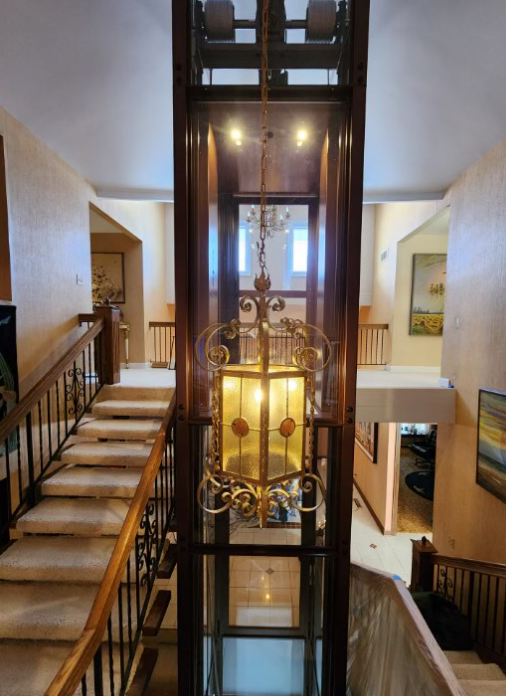
Making your home easier to navigate can mean different things depending on your mobility, floor plan, and plans for the future. For some Colorado homeowners, a stair lift is all that’s needed. Others may benefit from a wheelchair lift or the added flexibility of a residential elevator.
At Nationwide Lifts of Colorado, we help homeowners find accessibility solutions that fit the way they live. If you’re comparing a stair lift, wheelchair lift, or home elevator in Colorado, here are some important differences to consider.
Stair Lifts: A Simple Way to Navigate Stairs
A stair lift is designed for people who find climbing stairs difficult but are able to transfer safely into and out of a chair. The motorized seat travels along a rail attached to the staircase, providing an easier way to move from one level to another.
This option can be especially useful when the staircase itself is the main accessibility challenge. Stair lifts can be configured for many straight or curved stairways and typically require less modification to the home than other mobility solutions.
If a person primarily uses a wheelchair, however, transferring to a stair lift may not provide the independence or convenience they need.
Wheelchair Lifts: Stay in Your Mobility Device
A wheelchair lift, often called a vertical platform lift, works differently. Instead of transferring to a seat, the user can remain in a wheelchair or compatible mobility device while traveling between designated levels.
For Colorado homes with raised entrances, porches, decks, or changes in elevation, a wheelchair lift may provide a practical way to improve access. It can also be an option when a ramp would require too much space or wouldn’t work well with the property.
The available installation area and required vertical travel are important factors when determining whether a platform lift is suitable.
Home Elevators: Accessibility Across Multiple Floors
For homeowners looking for a more comprehensive solution, a home elevator can provide convenient access between multiple levels.
Residential elevators may be particularly valuable in multistory Colorado homes or for homeowners who want to remain in their current property as their mobility needs change. Depending on the elevator, they can accommodate passengers, mobility equipment, and everyday household items.
Adding an elevator is generally a more involved project than installing a stair or wheelchair lift. Your home’s structure, available space, electrical requirements, and applicable codes will all need to be evaluated.
Think About Your Needs Today and Tomorrow
Choosing between these options isn’t only about solving an immediate problem. It’s also worth considering how you’ll use your Colorado home over the next several years.
Ask yourself who will use the equipment, whether they need to remain in a mobility device, how many levels need to be reached, and whether mobility needs may change over time. Your home’s layout and available installation space will also help narrow the choices.
Find the Right Home Accessibility Solution in Colorado
There is no universal answer when comparing a stair lift vs. wheelchair lift vs. home elevator. The best choice is the one that provides the right combination of accessibility, practicality, and long-term usefulness for your household.
Nationwide Lifts of Colorado can evaluate your property and help you compare options based on your home’s layout and mobility goals. If you’re considering a stair lift, wheelchair lift, or residential elevator in Colorado, contact our team to learn more about creating a safer, more accessible home.